
Wondering why your reports never seem to catch problems before they cost you money? Here's the system that fixes that.
- Reporting Has a Sell-By Date: A monthly report tells you what already went wrong. By the time it lands, the margin's gone and the client's annoyed. Operational intelligence consulting builds the system that catches the problem in week one, not week four.
- BI With a Backbone: Business intelligence tells you what happened. Operational intelligence tells you what to do about it right now. One's a rearview mirror. The other's a steering wheel, and only one of those actually drives the car.
- Five Parts, Zero Shortcuts: Data strategy, KPI design, owner dashboards, process instrumentation, management rhythm. Skip one and the whole system wobbles like a table with a short leg.
- AI Is a Multiplier, Not a Miracle: Feed AI a mess and it'll summarize that mess beautifully, then hand you garbage anyway. Do the discipline work first. Then let AI go to work.

A growing business can survive bad reporting for a while. It cannot scale on it.
That's the real case for operational intelligence consulting. Once an SMB hits a certain level of complexity, more clients, more channels, more staff, more software, the old system breaks. Spreadsheets multiply. Team leads define success differently. The owner gets five versions of the same number in one week, and by the time the monthly report lands, the problem has already cost margin.
This is where operational intelligence stops being a nice extra and starts becoming operating infrastructure.
The market's moving that way fast. IMARC Group's operational intelligence market analysis puts the global OI market at USD 3.5 billion in 2025, on track to hit USD 7.2 billion by 2034. That growth tracks with what agency owners already feel on the ground: more live data, more pressure to react faster, more demand for systems that connect reporting to action.
For small and medium businesses, buying software is rarely the hard part. Building an intelligent operating system is and that's exactly why operational intelligence consulting matters.
Operational Intelligence Consulting Is Not Just BI With a Prettier Dashboard
A lot of companies say they want business intelligence. What they usually mean is "we want visibility."
That's a start. It's not enough.
Business intelligence tells you what happened. Operational intelligence consulting builds the system that helps you respond while the business is still moving. It connects live data to operating decisions, team accountability, process design, and leadership rhythm, turning raw data from a static artifact into an actionable intelligence tool you actually use.
For SMBs, that difference is huge.
A dashboard showing pipeline, utilization, delivery speed, churn risk, and cash position is useful. A consulting system that defines who owns each metric, what thresholds trigger action, and how often leadership reviews it — that's what actually changes the business.
Real Results, Not Just Prettier Charts
ScaleTime's homepage describes the work plainly: helping agency owners build systems and processes that improve performance and profits while getting the founder out of the daily operational choke point. Client outcomes include a 20 percent profit margin lift, 28 percent improvement in ideal client retention, 30 percent production efficiency gains, and faster recruiting cycles.
Those are operational results. They don't come from better-looking reports alone.
Why SMBs Struggle With Data Long Before They Realize They Have a Data Problem

Most small and medium businesses don't fail because they lack numbers. They fail because they lack usable ones.
The data is usually everywhere. Finance has one reporting cadence. Sales lives in the CRM. Delivery tracks work in a project platform. Marketing reports on leads and campaign performance. Support logs issues somewhere else entirely, and procurement intelligence, if it exists at all, is buried in email, vendor invoices, or a controller's notes.
The result is familiar: teams optimize locally, leaders manage by anecdote, and the founder becomes the integration layer holding it all together by sheer will.
Show Image
That setup can hold for a five-person company. It gets expensive at 25 people. At 50, it creates real operating blindness.
Fewer Metrics, Better Ones
This is one reason KPI consulting for SMBs has become more practical and more necessary. ScaleTime's own article on agency KPI metrics makes the same point in plain terms: KPIs only matter if they're measured regularly, tied to business goals, and visualized clearly enough for people to actually use them.
SMBs don't need fewer metrics because they're smaller. They need fewer bad metrics and far better alignment around the right ones.
A small business performance metrics system should answer questions like these:
- Are we selling profitably?
- Are we delivering efficiently?
- Are clients staying long enough to justify acquisition cost?
- Are our people at healthy capacity or hidden overload?
- Is cash conversion tightening or slipping?
- Which bottleneck is limiting growth right now?
That's the core of intelligent operations consulting. It doesn't start with "what charts do you want?" It starts with "what operating decisions are you currently making too late?"
The Shift From Reporting to Real-Time Business Intelligence
Many SMB reporting systems are built for explanation. Mature operating systems are built for intervention.
That distinction matters because monthly reporting has a structural flaw: it arrives after the fact. If your gross margin drops in week one, onboarding slips in week two, and your top account manager is overloaded by week three, a month-end slide deck isn't a control mechanism. It's a postmortem.
Real-time business intelligence changes that.
The broader BI market backs this up. IMARC Group's U.S. business intelligence market outlook describes real-time operational intelligence, predictive analytics, and AI-generated insights as core parts of the current BI category with implementation consulting and ongoing analytics services playing a bigger role than ever. Companies aren't buying BI as a static reporting layer anymore. They're buying it as an operating capability.
But a real-time data dashboard only works if the logic underneath it is solid. Fast bad data just creates faster confusion.
Where the Real Value Gets Built
This is where artificial intelligence operational efficiency consultants and operational intelligence consultants earn their keep. Their job isn't just deploying tooling, it's defining the measurement model behind it:
- What counts as a qualified lead
- How delivery capacity is calculated
- When utilization becomes unhealthy
- Which client health signals actually predict churn
- What procurement intelligence belongs in the owner view
- Which metrics are leading indicators versus lagging ones
Without that work, dashboards become decoration. With it, they become management infrastructure.
What Operational Intelligence Actually Looks Like for SMBs
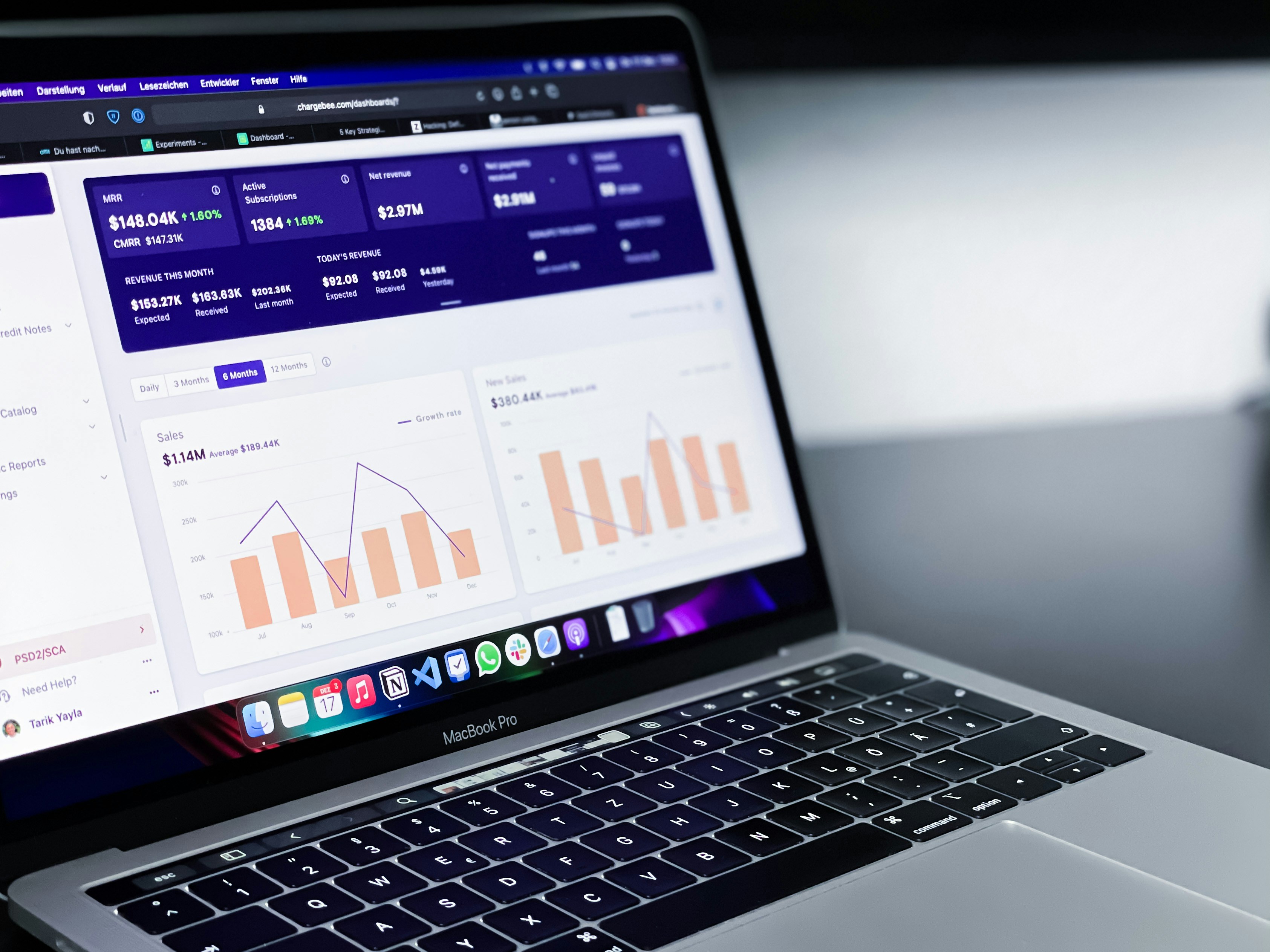
For an SMB, operational intelligence should feel practical, not academic. It should show up in the way the business runs every week, and that usually means a system with five parts.
1. A Clear Data Strategy Tied to Operating Priorities
Small and medium business data strategy often gets framed as a tech project. It's really a business model project.
You don't need every data point cleaned and centralized before you start. You need the handful of metrics that most directly govern revenue quality, delivery quality, cash health, and team capacity: a controlled system built around the numbers that actually change decisions.
A service business might begin with lead-to-close rate, average project margin, delivery cycle time, utilization by role, receivables aging, and client retention. A product-led business might start with trial conversion, onboarding completion, support volume, refund rate, and revenue retention. The strategy question is simple: which numbers best describe operational truth?
2. KPI Design That Reflects Causality
A surprising number of SMB dashboards are packed with output metrics and starved of driver metrics.
Revenue is important, but it's late. Profit is critical, but it's also late. An operational intelligence system needs the earlier signals that move those outcomes first.
ScaleTime's article on agency KPIs points to a mix of customer satisfaction, revenue growth, project profitability, and process efficiency, and that structure works because it reflects causality. Revenue doesn't improve in isolation. It moves when sales process, onboarding quality, delivery performance, and customer interactions move first. That's what smart KPI consulting for SMBs should build: a metric hierarchy where teams can see which behaviors create the result.
3. Owner Dashboards That Reduce Noise
A good owner dashboard doesn't try to show everything. It creates strategic compression.
ScaleTime leans into this idea throughout its content on agency growth. In its piece on 7-figure agency plateaus, the dashboard is framed as the owner's window into operations: one screen surfacing the few business operations consulting metrics that deserve immediate attention.
For most growing SMBs, that means some variation of:
- Sales pipeline quality
- Close rate
- Delivery capacity
- Gross margin by service line or client segment
- Overdue receivables
- Retention or churn risk
- Hiring pipeline for constrained roles
Good data visualization here isn't decoration. If a number moves, the dashboard should point straight at the system behind it. That's the difference between visibility and control.
4. Process Instrumentation
You can't improve what you don't define.
That's why operational intelligence consulting pairs naturally with process mapping, SOPs, and handoff design. ScaleTime's content on digital marketing operations ties strong operations to team structure, workflow, and continuous improvement, and its workflow tips for scaling a digital agency walk through what that mapping looks like in practice. The broader BizOps thinking reinforces the same point: data becomes useful once it connects cross-functional execution to leadership decisions.
Process instrumentation means every critical workflow gets measurable checkpoints, a form of business activity monitoring built right into daily operations. For example:
- Onboarding starts within 48 hours of signed contract
- Scope gets approved before work begins
- Project variance above a set percentage triggers review
- Receivables aging above threshold triggers a collections workflow
This is where operational excellence for growing businesses gets concrete. Metrics stop being abstract numbers and become triggers inside the operating system.
5. A Management Rhythm That Forces Action
Data without rhythm tends to die in dashboards.
The smartest SMBs use a regular cadence: daily exception monitoring, weekly functional review, monthly leadership synthesis, quarterly systems reset. That structure turns real-time business intelligence into repeatable management behavior. If nobody owns the review, nobody owns the response.
Where AI Belongs, and Where It Doesn't
The rise in AI tools has made this topic noisier than it needs to be.
Artificial intelligence operational efficiency consultants can absolutely help SMBs move faster. AI is genuinely useful for anomaly detection, forecasting, automated categorization, workflow alerts, and faster report generation, right in line with where both the OI market and the broader BI market are headed: more machine learning, more live analytics, less static historical reporting.
But AI doesn't remove the need for operational design.
If your company has inconsistent definitions, poor source data, no metric ownership, and unstable workflows, AI will scale the confusion. It can summarize a mess beautifully. It cannot govern it for you.
The better use case is narrower and more valuable. Use AI after the business has done the discipline work:
- Define metric ownership
- Standardize key processes
- Establish data source hierarchy
- Build dashboard logic
- Set alert thresholds
- Document actions tied to KPI movement
Do that, and AI becomes a multiplier. Skip it, and AI just makes the chaos move faster.
The Most Common Failure Modes in SMB Business Intelligence Projects

Industry experts have seen these patterns before, and they show up in roughly the same order every time.
First, the company overbuilds, launching a massive BI initiative before anyone agrees on ten core metrics. Second, the dashboard gets built around available data instead of useful decisions. Third, nobody clarifies definitions: sales says "qualified lead" one way, marketing says it another, and finance uses closed revenue that delivery disputes later.
Fourth, reporting gets delegated too far down. Analysts produce views that leadership doesn't use, and leadership makes calls outside the system anyway. Fifth, the company treats business operations consulting services as a one-time setup, when in reality the measurement system has to mature right alongside the business.
This is why the best intelligent operations consulting work is iterative. ScaleTime's positioning is built around putting systems in place, optimizing processes, and creating an operational foundation for growth. Foundation is the point. A data dashboard is only as useful as the agreed definitions, stable workflows, and leadership discipline underneath it.
The SMB Scaling Payoff
When operational intelligence is done well, the payoff isn't just cleaner reporting. It's better scaling economics.
You spot delivery drag before margin collapses. You catch onboarding issues before churn shows up. You identify which service lines are quietly absorbing hidden labor, and you see whether recruiting lag is constraining revenue before it becomes a crisis. You stop hiring based on panic and start hiring based on capacity signals, replacing founder intuition with team-visible operational truth.
That's what data-driven business scaling actually means.
For agencies and other service-led SMBs, it also kills one of the biggest hidden costs in growth: founder dependency. A business can't scale smoothly if every answer has to come from the owner's head. Operational intelligence consulting externalizes that knowledge into dashboards, review rhythms, thresholds, workflows, and team accountability, building a business that's easier to manage, easier to grow, and usually easier to sell.
Why This Matters Right Now
The case for operational intelligence consulting is stronger in 2026 than it was even a few years ago.
There are more systems, more data sources, more AI promises, and less tolerance for slow decision-making. At the same time, SMBs have better access to dashboarding, automation, and digital intelligence tooling than ever before. The barrier is no longer availability. It's design.
Think of operational intelligence for small and medium businesses as a management architecture issue, not a software category.
The winning SMBs aren't the ones with the most reports. They're the ones who know which few signals matter, trust the underlying definitions, review them at the right rhythm, and tie every number to a decision.
That's the real function of operational intelligence consulting. It gives growing businesses a system that can see clearly while the business is in motion — then act fast enough to matter.
None of this comes from a template, and it definitely doesn't come from guessing. If you want to see exactly where your own operations are bleeding time, margin, or founder hours, run the ScaleMap Diagnostic and get a clear-eyed read on where to focus first.






%20(1).gif)


